Why do we crave saturated fat when we're stressed?
Inspiration
- I noticed that I get strong cravings for foods high in saturated fat when I’m stressed or anxious. This pattern is so repeatable and recognizable that it had to have evolutionary or metobolic significance.
My guess before digging in
- Foods high in saturated fat are calorie dense, so it probably has to do with storing energy
Findings
The evolutionary case
For most of human prehistory, stress meant a genuine physical threat — predators, conflict, famine. High-calorie, high-fat foods were both rare and critical for survival. Under threat, your body anticipates one of two metabolic demands:
- Immediate energy expenditure (fight/flight) because you’re about to burn a lot of calories fast.
- There’s possible scarcity ahead, so stress often correlates with resource instability. That means loading up on dense calories when available was adaptive.
Fat is the most calorie-dense macronutrient (9 kcal/g vs. 4 for protein or carbs), and saturated fats in particular signal energy-rich animal foods (meat, dairy, marrow) which were high-value, high-effort acquisitions. Craving them under stress is your brain’s ancient “stock up while you can” heuristic firing.
The neurochemical mechanism
The craving isn’t random because fat actively dampens the stress response:
- HPA axis suppression: High-fat, high-sugar foods (the combination is key as ice cream hits both) reduce cortisol and corticotropin-releasing hormone (CRH) activity. Your body is essentially self-medicating the stress circuit.
- Dopamine and opioid release: Fat consumption triggers endogenous opioid release in the brain, producing mild analgesic and mood-stabilizing effects. This is the same system activated by actual opioid drugs, just far weaker.
- Vagal nerve signaling: Fat in the gut sends signals via the vagus nerve that have a calming, parasympathetic effect, literally slowing your heart rate and reducing arousal.
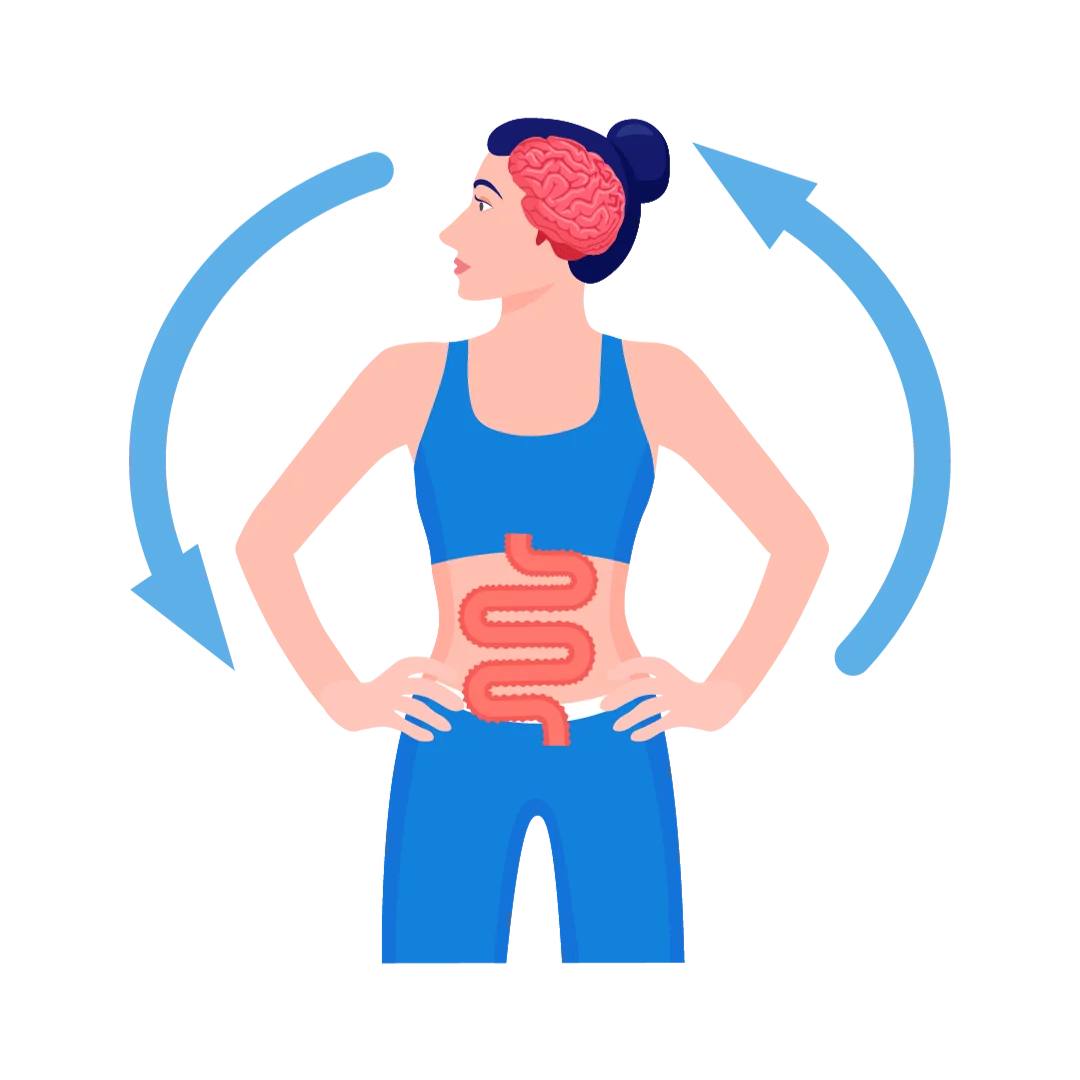
So the feedback loop is: stress > craving > eating fat > neurochemical relief > craving reinforced.
Why saturated fats specifically, over unsaturated?
A few reasons:
- Saturated fats are more calorically stable and were historically found in animal foods (the hardest to acquire, thus highest status/value).
- The texture of saturated fats, because their solidity at room temperature, the way they coat the mouth, activates reward circuits more strongly than liquid oils. Creaminess is itself a sensory signal of caloric density.
- Ice cream and cheese combine fat with salt and/or sugar, which creates a superstimulus, combinations your ancestors rarely encountered but that hit multiple reward pathways simultaneously.
The cruel irony
The mechanism that worked well when stress was acute (a predator, a storm) becomes maladaptive when stress is chronic and modern. Chronic elevated cortisol already promotes fat storage around the viscera; adding dietary saturated fat on top compounds that. The craving exists for a world where stress was short, sharp, and followed by physical exertion, not for sustained anxiety with no metabolic outlet.
Follow-up questions
What is the HPA axis?
- The hypothalamic-pituitary-adrenal axis
- It’s the body’s primary stress-response system, a chain of three glands that talk to each other in sequence:
- Hypothalamus (brain)
- Detects a stressor and releases corticotropin-releasing hormone (CRH)
- Pituitary gland (base of the brain)
- Receives CRH and releases adrenocorticotropic hormone (ACTH) into the bloodstream
- Adrenal glands (sitting on top of your kidneys)
- Receive ACTH and release cortisol
- Hypothalamus (brain)
Cortisol is the end product. It raises blood sugar for quick energy, suppresses non-urgent functions like digestion and immune response, and keeps you alert and reactive.
The system is self-regulating: when cortisol levels get high enough, it signals back to the hypothalamus and pituitary to slow down production. That’s a negative feedback loop, and it normally works well for acute stress.
The problem with chronic stress is that the feedback loop gets worn down. Cortisol stays elevated because the “all clear” signal never comes. That sustained cortisol is what drives a lot of the downstream damage associated with chronic stress: disrupted sleep, immune suppression, visceral fat accumulation, and yes, intensified food cravings.
High-fat food suppresses the HPA axis, so it genuinely reduces CRH and ACTH signaling. This means eating that ice cream produces a measurable, physiological calming effect, not just a psychological one. Which is part of why the behavior is so reinforcing.
Thanks for reading. If this was useful,
buying me a coffee
is the clearest signal I've got that it's worth writing more.
Questions or corrections are welcome at
jlmc.space@gmail.com