How gongfu style tea brewing works
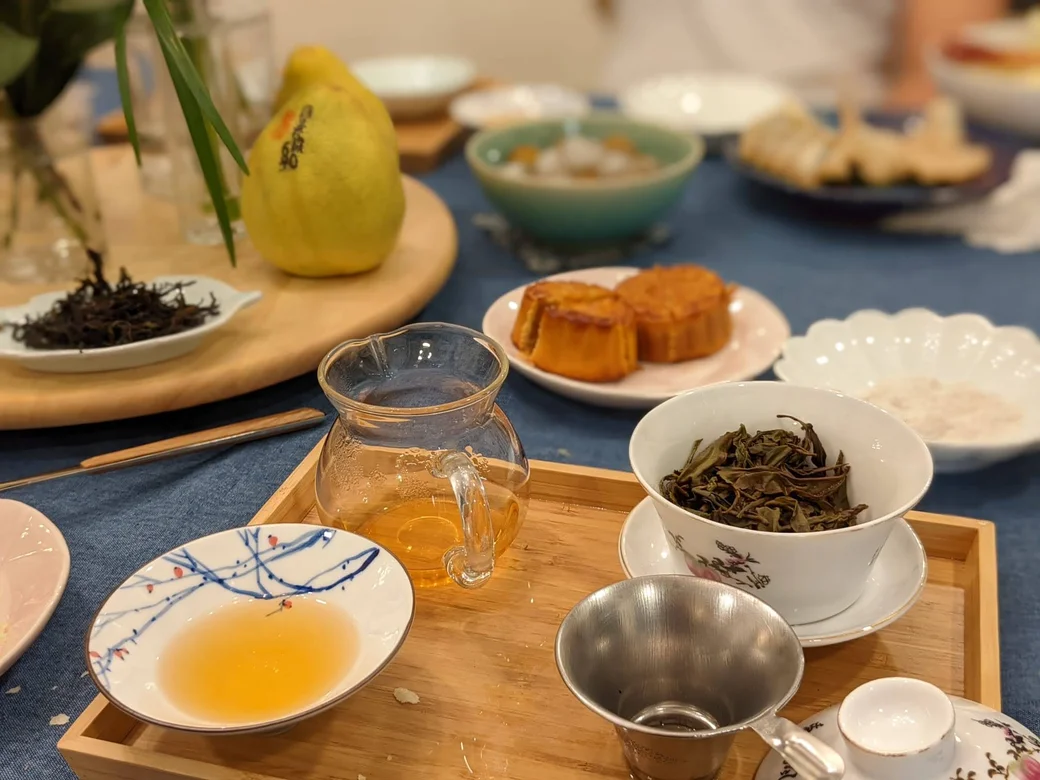
I’m carrying a small tray of hot porcelain across my living room, moving slower than I need to for anything else I do before 08:00. If I clip the coffee table leg, I’m sweeping up shards. This is how I make tea every morning, on purpose.
I’ve never been a coffee drinker, not at any point in my life. That left me sitting outside a whole subculture: the routines people build around a specific pourover, the debates over beans and roast levels, the ritual of grinding and timing a cup before the day starts. I never missed the caffeine. I missed having a thing, a small private practice that was mine.
I didn’t know that’s what I was missing until gongfu tea filled it.
What I tried / what I learned
This all started when a coworker used to brew tea at his desk with a gaiwan. One day he offered me a cup, and I was curious to know more about it. The tea was quality, brewed well and I was surprised by the gentle tingling sensation on my tongue. I asked him about the tea, he passed some along, and I started brewing on my own.
What it is
Gongfu cha (工夫茶) is a Chinese brewing method built around a small vessel, a generous amount of leaf, and many short steeps instead of one long one. “Gongfu” translates roughly to “making tea with skill,” and that’s the point: you’re steering the brew steep by steep rather than dumping water on leaves and walking away. Path of Cha’s guide (opens in a new tab) is a good, thorough starting point if you want the full picture.
Three pieces of gear cover the basics:
- Gaiwan(蓋碗) - a lidded bowl (gai = lid, wan = bowl) you steep in and pour directly from.
- Gong dao bei(公道盃) - the “cup of impartiality.” You pour the tea from the gaiwan into this first, then pour from it into cups, so everyone’s cup is the same strength. It’s also known as a cha hai (茶海), which literally translates as “sea of tea”.
- Cups - small ones. This isn’t a mug of tea, it’s a few ounces at a time, repeated.
How to get started
All you really need is quality loose-leaf tea. Bagged tea won’t work for this: teabags are cut with the CTC method, which leaves little of the polyphenols and flavor compounds that gongfu brewing is built to draw out. A teabag is designed for one fast extraction, convenience over experience. Gongfu brewing does the opposite: it opens the leaf, rehydrates it, and lets the flavor come out gradually over several steeps.
Look for tea grown in an Asian country, primarily Taiwan or China. I’ve also had very good tea from Vietnam. For a daily-drinking starting point, oolong is the standard. There are dozens of oolong styles, so don’t overthink it, just start with whatever’s available near you at an approachable price.
Don’t get caught up in teaware at the beginning either. All you need is a kettle and something to boil water into, plus a mug or cup to drink from.
Meditative qualities
What surprised me was how meditative the process turned out to be. Carrying a tray of porcelain across the room means staying fully present. If I don’t keep it level, or I catch the coffee table leg wrong, I can send the whole set to the floor in pieces. Brewing itself demands the same attention: over-steep the leaves and you get a bitter, acrid cup instead of a good one.
That constant, low-level attention turned into something I looked forward to. Over time I noticed that while I was brewing, I was calm and present in a way I wasn’t anywhere else in my morning. I kept coming back to it not just for the caffeine, but because I knew it would be a centering way to start the day.
Hobby formation
Years later, I’m still brewing. It’s grown into something I actively look for when I travel, seeing how tea culture differs from place to place, how people change it with milk, spices, or sweeteners, and the different vessels and methods each culture uses. I have a full gongfu set at home and a travel set that goes with me. The habit spilled over into experimenting with my own masala chai recipe, and into a version of yerba mate I make with dried mint, honey, and lemon juice.
I still don’t drink coffee. I just found my own version of the ritual everyone else already had, one small cup at a time.
Related posts
Thanks for reading. If this was useful,
buying me a coffee
is the clearest signal I've got that it's worth writing more.
Questions or corrections are welcome at
jlmc.space@gmail.com